Weaving Trust and T.I.M.E. into Neighbourhood Brain Health
Across the world, dementia remains under-recognised, particularly in culturally and linguistically diverse communities where stigma, language barriers and limited health literacy delay recognition and access to support. For many South Asian families, conversations about memory loss are often avoided until a crisis occurs.
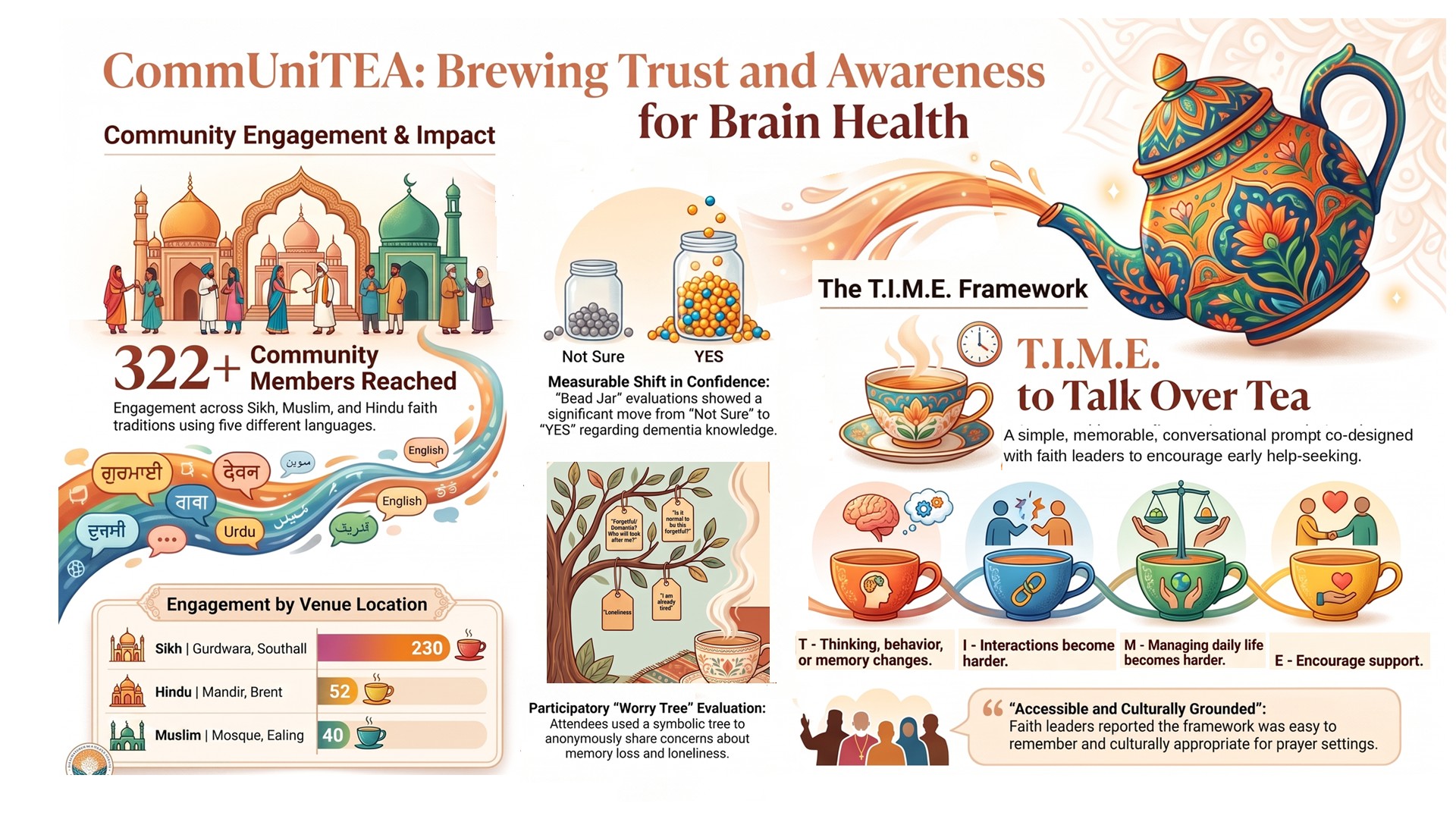
CommUniTEA is a community-led neighbourhood brain health initiative co-developed by the Octopus Dementia Tapestry Working Group in London, UK, led by Dr Pallavi Nair from Imperial College London. Built on the "Octopus" model of integrated neighbourhood care, it demonstrates how trusted partnerships can improve brain health awareness, reduce stigma, encourage earlier help-seeking and strengthen connections between communities and health services. The initiative brings together a 12-member multidisciplinary team of healthcare professionals, voluntary sector organisations, local authority representatives and public partners with lived experience, alongside four faith leaders to co-design culturally responsive "tea-time" conversations that bring brain health into trusted faith spaces, where people already gather.
CommUniTEA responds by moving beyond traditional awareness campaigns and embedding culturally grounded brain health promotion within trusted community spaces. Sharing tea provides a familiar, welcoming environment where conversations about ageing, memory and wellbeing can happen naturally, reducing fear while strengthening trust.
A key innovation is the T.I.M.E. framework (Take “T.I.M.E.” to Talk): a simple, memorable conversation prompt inspired by the success of the FAST stroke campaign, co-designed with faith leaders and reviewed by Alzheimer's Research UK. Rather than acting as a diagnostic checklist, T.I.M.E. is an action-oriented tool that encourages supportive conversations and earlier help-seeking:
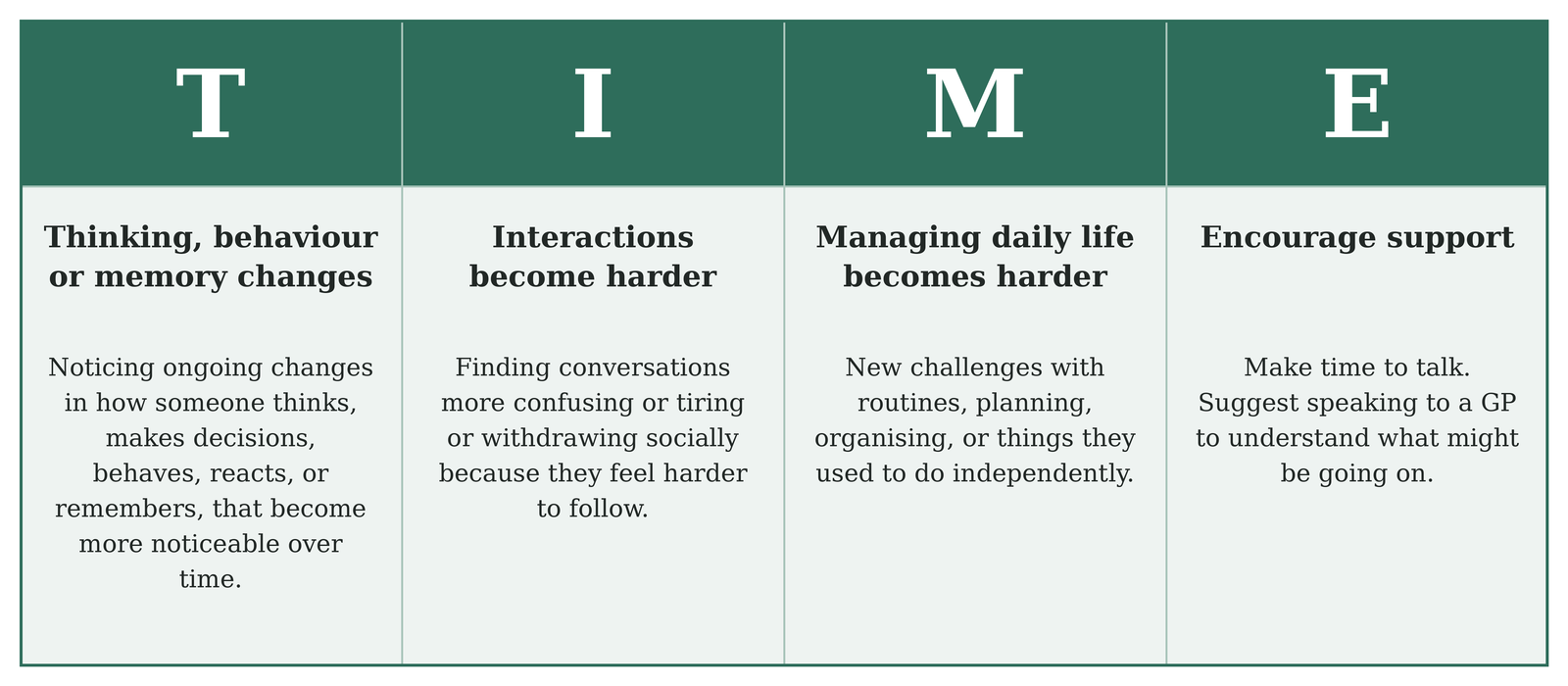
Faith leaders recognised that "Taking T.I.M.E." resonated strongly with cultural values of patience, compassion, family responsibility and caring for older generations, making it both memorable and culturally meaningful.
Impact & Systemic Shifts
CommUniTEA has engaged more than 320 community members across three faith communities with multilingual delivery in five languages where needed. Beyond raising awareness and positive brain health messaging, it achieved meaningful psychological and community-level changes:
- Knowledge Transformation: A bead jar evaluation showed a clear shift in participants' confidence from being "Not Sure" how to respond to memory concerns to an overwhelming "Yes" by the end of each session.
- Breaking the Silence: The "Worry Tree" activity created a safe space for attendees to share handwritten concerns, marking the first time many had expressed fears of dementia or loneliness.
- Community Advocacy: All participating faith leaders continue to use the T.I.M.E. framework in community addresses and are exploring regular monthly brain health sessions to promote social connection and healthy lifestyles.
CommUniTEA demonstrates that a neighbourhood-based, task-shared approach can strengthen brain health by integrating clinical knowledge with trusted community relationships. By building on existing community assets, participatory co-design and local leadership rather than specialist infrastructure, it is low-cost, culturally adaptable and readily transferable to other communities and countries seeking equitable approaches to brain health promotion, dementia awareness and earlier access to care.
You can find more information about this initiative here:
- The CommUniTEA project brings TIME to dementia care
- Weaving Care, Together: A Neighbourhood Approach to Dementia